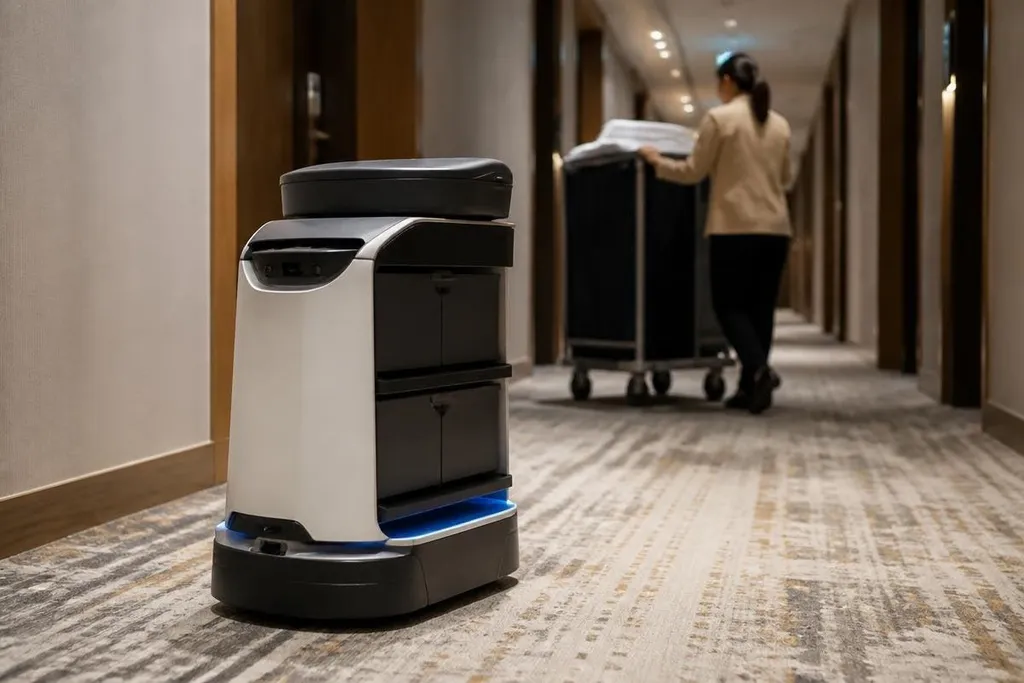
For a hotel, a robot has to move through guest areas, handle a defined task, and recover when the building gets busy. That sounds basic, but it changes how hotel managers should judge the next wave of machines.
- Room delivery needs safe handoff at the guest door.
- Luggage work depends on payload, lift height, and floor access.
- A robot without staff support becomes another service queue.
Start with the task
Name the job before comparing robot designs. Room delivery, luggage movement, floor cleaning, food service, and night patrols each need different hardware and staff routines.
A delivery robot needs a compartment that keeps items secure and at the right temperature when required. It also needs a way to call the lift, reach the correct floor, and tell staff when a guest does not answer.
Luggage work asks different questions. The buyer needs the payload in kilograms, the size of the storage area, the turning space, and the height of the loading point. A robot that carries one small bag may fit a lobby trial but fail during a group check-in.
The same test applies to cleaning. Ask for the floor types, battery runtime, charging time, water capacity, and the area covered per shift. A machine that needs frequent staff attention can move work rather than remove it.
Hotel buildings are hard places to run robots
The route matters as much as the robot. Hotels have glass doors, carpet edges, mirrors, narrow corridors, guests stopping without warning, and lifts shared with people carrying bags.
A buyer should ask for a map of the intended route and a live trial on that route.
The trial needs occupied corridors, a closed lift, a blocked doorway, and a staff member calling the robot away from its planned task. These checks reveal how the system behaves when the clean path disappears.
Autonomous navigation means the robot chooses its movement from sensor data. That system still needs clear rules for speed, stopping, guest privacy, and staff control. Ask what happens when a sensor fails, the network drops, or the robot reaches a door it cannot open.
Remote support also needs a written process. The hotel should know who receives an alert, how fast they respond, and how staff move the robot safely when it stops in a guest area.
Guest service changes the test
Because it works in public, the robot's screen, lights, sounds, and voice affect the service around it, even when its main task is carrying a tray.
The handoff needs a clear end point. A guest may receive a code, scan a phone, open a compartment, or meet a staff member at the door. Each step adds time and creates a chance for a failed delivery, so the hotel should measure the full handoff rather than the robot's travel time alone.
Privacy also needs a direct answer. Ask what the robot records, where that data is stored, how long it stays there, and who can view it. Camera data from a corridor deserves the same care as any other guest information.
For a hotel manager, that means checking the named robot, its cameras, storage rules, and service terms in reporting from Robot24.com before weighing the details a vendor may leave out.
The part vendors may leave out
The purchase price is only one line in the plan. Staff training, lift access, network changes, charging space, software fees, repairs, and guest support can shape the cost of running the robot.
A vendor should state what the hotel receives at delivery and what needs a paid service visit. Ask for the spare parts list, repair response time, software update process, and battery replacement price. If those details are missing, the buyer cannot set a useful operating budget.
The open question is repeatability. A recorded demo can show that a robot completed one task. It does not show how many tasks it can finish during a full shift, how often staff must step in, or how it behaves after weeks of use.
I'd wait for a site trial with written results before approving a wide hotel rollout.
A practical buying check
Use this list before signing a pilot agreement:
- Name the shift task: Write the exact job, hours, route, load, and handoff point.
- Measure the building: Record corridor width, door sizes, lift access, floor surfaces, and charging space.
- Set staff rules: Assign alert ownership and define who can stop, move, or reset the robot.
- Test failure cases: Block a route, remove the network, fill the lift, and repeat the task with guests nearby.
- Price the full service: Add software, training, repairs, batteries, and replacement parts to the robot price.
- Set a pass mark: Agree on completed tasks per shift and the maximum number of staff interventions.
That pass mark gives the pilot a useful end point. If the robot cannot meet it on one hotel floor, a larger rollout only spreads the same problem across more floors.
The next hotel robots will earn a place through repeatable service: a named task, a known route, a measured handoff, and a support plan that works after the demo ends.